
A high-performing call center is essential for business success. This critical customer touchpoint shapes perceptions, drives loyalty, and impacts revenue. Basic scripts and satisfaction surveys no longer suffice – call center quality assurance has grown more sophisticated, powered by new technologies and deeper insights into customer behavior.
Effective quality assurance goes beyond checklists to examine the complete customer journey. The goal is enabling agents to provide personalized, caring service while gathering actionable data to improve operations. The field has evolved from Total Quality Management (TQM) foundations to emphasize data-driven improvements and customer experience (CX) optimization.
This guide provides 10 proven best practices to transform your call center into a customer loyalty engine. It’s designed for call center managers, customer service teams, quality assurance specialists, and business leaders who want to evaluate agent performance effectively, identify improvement areas, and build a culture of continuous learning. By implementing these strategies, you’ll position your call center as a key driver of business growth rather than just a cost center.
The content focuses on practical, actionable advice backed by experience and research. Whether you’re looking to enhance existing QA processes or build a program from scratch, you’ll find specific steps to assess and improve your call center operations while maintaining high service standards.
Call recording and monitoring forms the foundation of effective call center quality assurance (QA). This practice involves systematically recording and evaluating customer interactions to maintain quality standards, ensure compliance, and identify ways to improve agent performance and processes.
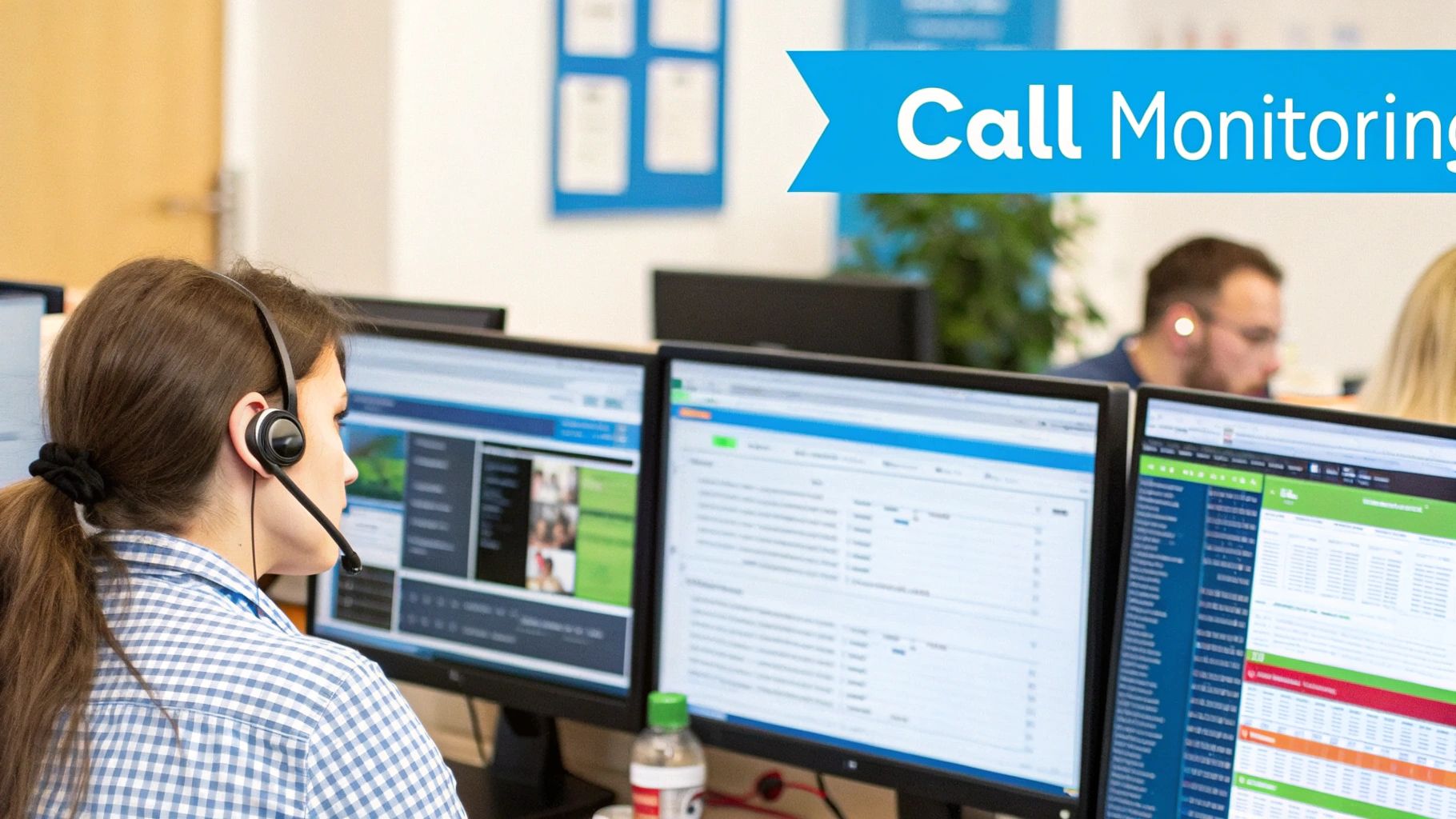
This core practice earns its top position because it generates the essential data needed for all other QA activities. Without recorded calls, it becomes much harder to properly evaluate performance, spot patterns, and make informed decisions.
Today’s call recording and monitoring tools include several key capabilities:
Benefits:
Challenges:
Real Company Applications:
Implementation Tips:
Leading companies like NICE Systems, Verint, and Calabrio have helped develop modern call recording technology. Their solutions help transform call centers into valuable business assets that improve customer satisfaction and operational results.
Standardized evaluation forms are essential for effective call center quality assurance. These forms provide a clear, consistent way to assess agent performance across key metrics and behaviors. Having standardized forms leads to fairer evaluations and data you can actually use.
Rather than relying on gut feelings, these forms use specific criteria and scoring to measure how agents perform. This allows managers to make meaningful comparisons between agents, teams, and different time periods. For instance, the form might give more weight to completely resolving issues on the first call compared to average handle time, showing what matters most.
Key Elements of Good Evaluation Forms:
How Forms Have Changed:
Call center evaluation forms have come a long way from paper checklists. Modern solutions like Five9 Quality Management and Talkdesk QA Scorecards offer digital platforms for managing evaluations and analyzing data. This shift happened because centers needed better efficiency and ways to handle complex customer interactions.
Benefits:
Challenges:
Implementation Tips:
Real Example: An e-commerce company improved their customer service by implementing standardized forms focused on problem resolution and satisfaction. Using the data to guide coaching, they saw higher satisfaction scores and fewer customers leaving.
When used thoughtfully and updated regularly, standardized evaluation forms help call centers improve quality, boost agent performance, and keep customers happy.
Call center quality assurance needs regular calibration sessions to maintain consistent standards across the QA team. These planned meetings ensure all quality analysts evaluate calls using the same criteria and standards. Without proper calibration, agents receive mixed feedback and data becomes unreliable for driving improvements.
During calibration sessions, the QA team evaluates the same customer interactions together. The process typically involves having each team member independently score a recorded call based on factors like empathy, product knowledge, and resolution. The team then compares scores and discusses any differences in interpretation. For example, one evaluator might rate empathy lower due to perceiving a pause as hesitation, while another sees it as thoughtful consideration.
Modern call recording and analytics tools have made calibration more important than ever. While technology makes it easy to capture interaction data, that data is only valuable if scoring is reliable and consistent. Regular calibration helps ensure QA scores accurately reflect agent performance and guide coaching efforts. You might be interested in: [Effective Coaching Techniques for Call Center Agents].
Key elements of effective calibration sessions include:
Benefits:
Challenges:
Implementation Tips:
Regular calibration sessions are essential for any call center quality program. They help ensure fair agent evaluations, effective coaching, and ultimately better customer experiences. Read also: [Improving Customer Satisfaction in the Call Center].
Self-evaluation, where agents review and score their own customer interactions before a QA specialist, is one of the best practices in call center quality assurance. This process helps agents understand quality standards more deeply and gives them a sense of ownership over their performance.
Over time, the QA process has shifted from a top-down approach that often felt punitive to agents to a more collaborative model. Through self-evaluation, agents can identify areas for improvement on their own terms, making them more receptive to QA feedback and more invested in their growth.
Key Components of Successful Self-Evaluation Programs:
Real Example: Consider Sarah, a call center agent who had trouble with escalated calls. By reviewing her own recorded calls, she noticed she often interrupted angry customers, making situations worse. This self-discovery helped her be more open to coaching on de-escalation methods and motivated her to improve.
Benefits:
Challenges:
Implementation Best Practices:
Self-evaluation transforms quality assurance from monitoring to development. When agents take ownership of their growth, it creates lasting positive change that leads to better customer experiences.
Real-time monitoring and coaching has become essential for modern call center quality assurance. By observing agent interactions live and providing instant guidance, supervisors can help agents improve in the moment rather than after the fact. This proactive approach prevents mistakes from being repeated and creates an environment focused on ongoing improvement.

The old approach of reviewing calls after they ended provided limited opportunities to fix issues quickly. However, with the rise of cloud-based contact center solutions, real-time monitoring has become much more practical and effective. This allows call centers to provide better support to agents when they need it most.
Key Features of Real-Time Monitoring and Coaching:
Pros:
Cons:
Practical Tips for Success:
Real-time monitoring and coaching stands out as a best practice because it gives agents the support they need when they need it most. This leads to better performance, happier customers, and more efficient operations. For call centers aiming to provide excellent service, it’s a worthwhile investment.

Effective call center management requires more than intuition – it demands concrete data and metrics. Call centers need systematic ways to measure and improve their performance through analytics and Key Performance Indicators (KPIs). This evidence-based approach enables managers to make informed decisions and enhance customer service based on real insights rather than assumptions.
Traditional quality assurance relied on manual call monitoring and subjective reviews. While these methods provide value, they are time-intensive and can be influenced by personal bias. Modern analytics tools have transformed how call centers track and analyze performance metrics. These solutions offer deeper visibility into operations and help identify areas for improvement.
Key features of data-driven quality programs include customized KPI dashboards, trend analysis, and performance benchmarking. Real-time monitoring of metrics like First Call Resolution (FCR), Average Handle Time (AHT), and Customer Satisfaction (CSAT) helps managers spot issues quickly. Trend analysis reveals important patterns – for example, showing how call volumes impact satisfaction scores during peak periods. By comparing metrics against industry standards, centers can identify gaps and adopt proven best practices.
Real-world example: An e-commerce company implemented data analytics and discovered through trend analysis that one product line generated an unusually high volume of technical support calls. This insight led them to improve product documentation and agent training, resulting in fewer calls and higher customer satisfaction.
Benefits of Data-Driven Quality Metrics:
Challenges to Consider:
Implementation Tips:
Embracing data-driven quality management allows call centers to move beyond subjective assessments. When implemented effectively, this approach leads to optimized performance, improved customer experiences, and measurable business results.
Effective call center quality assurance requires the most essential perspective – direct input from customers. Integrating customer feedback into quality assessment processes helps bridge the gap between internal evaluations and actual customer experiences.
In the past, call centers focused mainly on internal quality monitoring through checklists and supervisor reviews. Today, new tools make it much easier to gather and analyze real customer feedback, making it a core part of quality assurance.
Key Components of Customer Feedback Integration:
Real Example: A telecom company started using post-call surveys to rate agent helpfulness and problem resolution. When they matched this against internal scores, they found agents rated highly for speed but customer satisfaction was low. VoC data showed customers valued thorough explanations over quick calls, leading them to update training to focus on clarity and complete support.
Benefits:
Challenges:
Tips for Success:
Good quality assurance needs the customer’s voice. By bringing customer feedback into QA processes, call centers can move beyond basic metrics to deliver experiences that truly satisfy customers.
A Quality Coaching Program helps develop agent skills by focusing on specific areas identified through call monitoring and quality assessments. Unlike general training, this approach targets individual agent needs discovered through customer surveys and quality metrics. This targeted development method leads to better results for both agents and customers.
Research shows that generic training often misses key issues affecting individual agents and the customer experience. Quality Coaching Programs solve this by creating personalized development plans that address each agent’s unique challenges and opportunities for growth.
Features of an effective Quality Coaching Program:
Pros:
Cons:
Tips for Success:
Looking to learn more? Check out information on call center quality monitoring strategies and best practices in our author content section: Call Criteria Sitemap
Real Example: A call center focused their coaching program on improving agent empathy after low customer survey scores. They trained agents in active listening and emotional awareness. Follow-up surveys showed major improvements in customer satisfaction related to empathy.
Read also: [Effective Call Center Training Strategies] (placeholder link)
A well-designed Quality Coaching Program helps agents grow their skills, leads to happier customers, and delivers better business results through its focus on individual development and continuous improvement.
A solid QA program plays a vital role in call center excellence. While manual reviews have their place, modern quality assurance requires purpose-built technology tools. An integrated QA tech stack helps managers capture interactions, analyze performance, deliver coaching, and track improvements over time.
Traditional call center QA relied on manual call monitoring and scoring forms. This approach was slow, sampled few calls, and introduced human bias. As digital tools emerged, companies gained access to automated solutions that could process more data and provide deeper insights into customer conversations.
Key Components of a QA Tech Stack:
Benefits:
Challenges:
Implementation Tips:
A modern QA technology stack helps call centers move beyond manual processes to data-driven quality management that improves customer experience and agent performance.
A Continuous Improvement Framework helps call centers consistently improve quality through ongoing assessment and refinement. Rather than a temporary solution, it represents an ongoing commitment to better customer service and team performance. This makes it essential for call centers focused on long-term success.
The framework is built on the principle that quality is an ongoing journey, not a destination. It combines regular process evaluation, comprehensive feedback gathering, and measured implementation of improvements. Here are the key components:
Key Benefits:
Main Challenges:
Implementation Tips:
Background and Methods:
The continuous improvement approach builds on established methodologies like Six Sigma, Lean Management, and Kaizen. Six Sigma targets reduced errors, Lean focuses on efficiency, while Kaizen emphasizes small, ongoing improvements. These methods have shaped how call centers implement continuous improvement.
Real Example: A call center used this framework to fix long hold times. Through process reviews and customer feedback, they found issues in their call routing. By optimizing routing based on the findings, they cut wait times by 45% and improved satisfaction scores by 30%.
A Continuous Improvement Framework is crucial for call centers seeking excellence. With structured, ongoing refinement of processes, call centers can consistently enhance service quality and adapt to evolving customer demands.
| Method | Difficulty | Time Required | Results | Best For | Key Benefit |
|---|---|---|---|---|---|
| Call Recording and Monitoring | Moderate 🔄 | Slow ⚡ | Reliable 📊 | Compliance & performance | Concrete evidence ⭐ |
| Standardized Evaluation Forms | Easy 🔄 | Moderate ⚡ | Consistent 📊 | Uniform assessments | Fair scoring ⭐ |
| Regular Calibration Sessions | High 🔄 | Time-consuming ⚡ | Aligned scores 📊 | Team consistency | Improved accuracy ⭐ |
| Agent Self-Evaluation | Easy 🔄 | Quick ⚡ | Engaged agents 📊 | Self-improvement | Ownership boost ⭐ |
| Real-Time Monitoring and Coaching | High 🔄 | Immediate ⚡ | Instant impact 📊 | Rapid issue correction | Real-time feedback ⭐ |
| Data-Driven Quality Metrics | High 🔄 | Setup intensive ⚡ | Objective insights 📊 | Data-driven analysis | Proactive improvements ⭐ |
| Customer Feedback Integration | Low-Medium 🔄 | Moderate ⚡ | Customer-centric 📊 | Experience enhancement | Customer validation ⭐ |
| Quality Coaching Program | High 🔄 | Ongoing ⚡ | Skill development 📊 | Agent growth | Targeted improvement ⭐ |
| Quality Assurance Technology Stack | High 🔄 | Implementation intensive ⚡ | Streamlined QA 📊 | Tech-driven QA | Efficiency gains ⭐ |
| Continuous Improvement Framework | Moderate 🔄 | Long-term ⚡ | Sustainable gains 📊 | Organization-wide change | Ongoing enhancements ⭐ |
By implementing these 10 call center quality assurance best practices, you can build a culture focused on improvement and help your agents deliver better customer experiences. The foundation starts with standardized evaluation forms and agent self-assessments to get a complete picture of performance. Regular calibration sessions keep scoring consistent, while real-time monitoring allows for immediate coaching. Data-driven metrics and customer feedback help identify where to focus improvement efforts.
Creating an effective QA program requires a well-planned approach. The first step is defining clear quality standards and getting your team aligned. Provide thorough training on QA processes and tools. Keep communication open between agents and customers, and regularly analyze metrics to spot trends and refine your strategy.
Quality assurance is an ongoing process that requires adaptability. The contact center industry continues to evolve with new capabilities like AI analytics, automated coaching systems, and personalized customer interactions. Staying current with these advancements while maintaining your core QA framework helps deliver consistently great service.
Key Takeaways:
Want to take your call center performance to new heights? Call Criteria combines advanced technology with expert analysis to enhance customer interactions. Our blend of AI capabilities and human quality assurance helps representatives deliver better service and drive improved business results. Let us design a solution tailored to your contact center needs.